Editor's Choice 2026

The Best Solar Generators & Portable Power Stations, Compared

An honest, editorial comparison of the top solar generators you can buy in 2026 — capacity in Wh, inverter topology, charge speeds, and which one fits your use case.

Compare products

As an Amazon Associate we earn from qualifying purchases. Links marked 'View on Amazon' are affiliate links.

Our Picks

Compare Best Solar Generators 2026

Each product is independently evaluated and scored out of 10.

★ Top Pick
EcoFlow Delta 3 Classic Portable Power Station #1

EcoFlow Delta 3 Classic Portable Power Station

Home backup, daily-use off-grid, anyone who values fast recharge and long battery life.

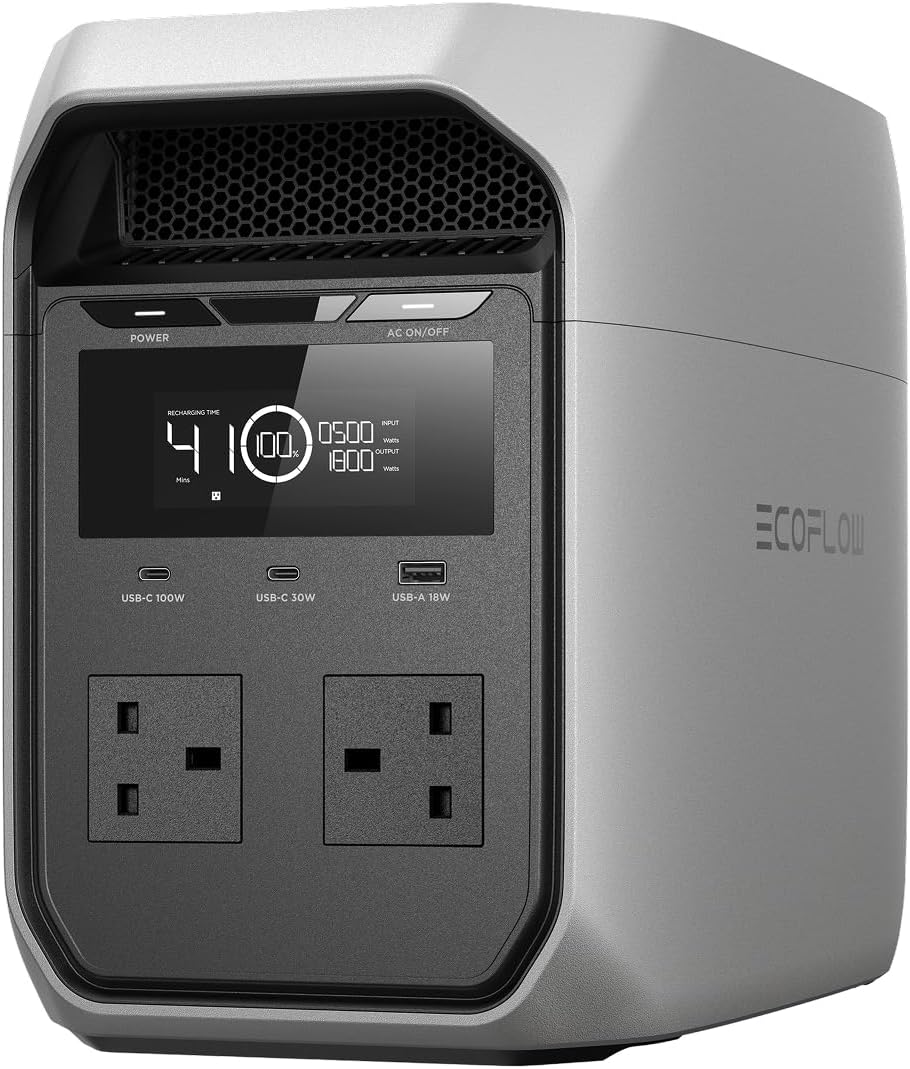
The EcoFlow Delta 3 Classic is the best all-rounder in this comparison and the direct successor to the popular Delta 2. Its 1024Wh LiFePO4 pack charges from 0-80% in 50 minutes via X-Stream — faster than anything else on this list — and the 1800W inverter (3600W surge) handles kettle, microwave, and power-tool loads without flinching. Pair it with a 220W solar panel and you can recharge in 3-6 hours of sun.

Pros

  • 1024Wh LiFePO4 battery rated for ~3000 cycles (10+ years of daily use)
  • X-Stream AC charging hits 80% in 50 minutes — fastest in this comparison
  • 1800W continuous / 3600W surge inverter runs resistive loads like kettles
  • Wi-Fi + Bluetooth app for remote monitoring and charge-rate control

Cons

  • ~11kg — heavier than some rivals despite the ~1kWh capacity class
  • App required to unlock quiet charging mode (loud by default on full X-Stream)
View on Amazon
Jackery Explorer 1000 v2 Portable Power Station #2

Jackery Explorer 1000 v2 Portable Power Station

Car camping, van life, remote work — anywhere weight and portability matter.

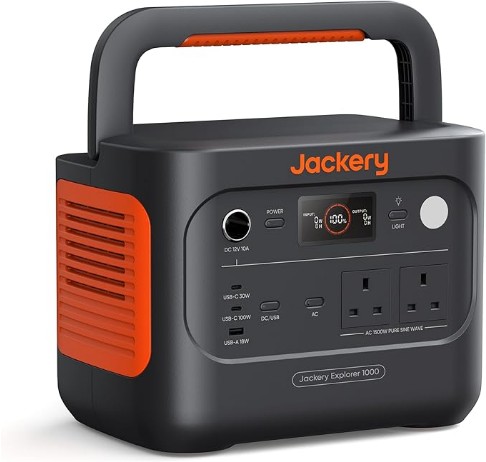
The Jackery Explorer 1000 v2 (2024) is the most portable of the three and the successor to the Explorer 1000 Pro. The 1070Wh LiFePO4 pack charges to full in around 1.8 hours via the wall, and the 1500W continuous (3000W surge) pure-sine inverter covers CPAP machines, laptops, small fridges, and even a microwave briefly. A good pick if you will actually carry it.

Pros

  • Lightest in this comparison at ~10.3kg with a real folding carry handle
  • 1070Wh LiFePO4 chemistry — Jackery moved away from NMC for the v2 line
  • 1500W pure-sine inverter with 3000W surge covers most portable loads
  • 100W USB-C PD output per port for fast laptop charging without a brick

Cons

  • Slower AC charge than the EcoFlow Delta 3 Classic (1.8 hours vs 50 minutes)
  • Single 100W max per USB-C port — lower total PD output than some rivals
View on Amazon
Bluetti Elite 200 V2 Portable Power Station #3

Bluetti Elite 200 V2 Portable Power Station

Home backup, cabin/off-grid base load, anyone who needs maximum capacity over portability.

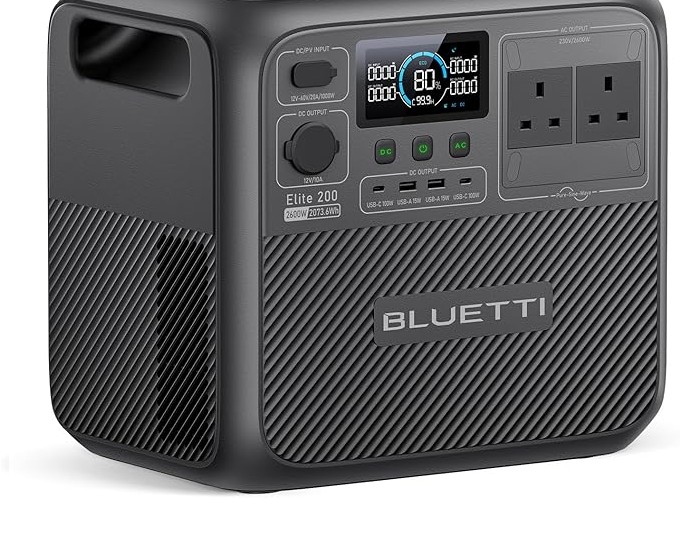
The Bluetti Elite 200 V2 (2025) is the capacity pick — 2073.6Wh of LiFePO4 battery and a 2600W continuous (3900W power-lifting) inverter will run a full-size fridge, a microwave, or power tools for hours. Successor to the older AC200P, with the major upgrade of LiFePO4 chemistry (the AC200P was NMC, ~800 cycles; the Elite 200 V2 is rated for ~17 years of daily use). Still heavy at ~24kg — this is a "wheeled or stationary" unit, not a carry one.

Pros

  • 2073.6Wh LiFePO4 capacity — roughly double the other two units on this page
  • 2600W continuous / 3900W power-lifting inverter handles power tools and full-size fridges
  • LiFePO4 chemistry rated for ~17-year lifespan (a major upgrade over the old NMC AC200P)
  • Multiple AC outlets — enough to run several devices simultaneously

Cons

  • ~24kg — heavy; this is a stationary or wheeled unit, not a portable one
  • Slower AC charging than the EcoFlow Delta 3 Classic
View on Amazon

What is a solar generator?

A "solar generator" is a portable power station — a rechargeable lithium battery pack with a built-in inverter, AC outlets, USB ports, and a charge controller — designed to be recharged from solar panels, a wall socket, or a 12V car port. Despite the name, almost none of them ship with a panel in the box: you buy the panel separately and plug it into the station's solar input (typically an XT60 or Anderson connector).

The headline spec is capacity, measured in watt-hours (Wh). A 500Wh unit will run a 100W laptop for roughly 4-5 hours, a 1000Wh unit for about 9 hours, and a 2000Wh unit for around 18 hours. The inverter rating (in watts, W) determines the peak load you can plug in — a 1000W inverter handles a kettle or a microwave briefly, while a 600W inverter tops out at lights, laptops, and small tools. Most modern units also quote a surge rating (2x continuous) for motor start-ups like fridges and power tools.

The chemistry matters as much as the watts. The current generation (EcoFlow Delta 2, Jackery 1000 Pro, Bluetti AC200P) is split between LiFePO4 (lithium iron phosphate, ~3000 cycles to 80%) and NMC (nickel-manganese-cobalt, ~500-800 cycles). LiFePO4 is heavier and slightly larger per Wh but lasts years longer and is markedly safer at full discharge.

How we compared these products

We scored the three solar generators below across six dimensions weighted toward what actually matters when you are relying on battery power: usable capacity (Wh, not the marketing number), inverter output and surge headroom, charge speed (the biggest day-to-day quality-of-life spec), battery chemistry and cycle life, port selection (AC, USB-C PD wattage, DC outputs), and warranty terms from the manufacturer.

Capacity figures are the rated Wh, de-rated by roughly 15% to account for inverter conversion losses — a 1024Wh battery realistically delivers about 870Wh to your devices. Inverter output is the continuous rating, with surge noted where a motor or resistive load is realistic. Charge speeds are the AC wall-charger times to 80%; solar charge times depend entirely on the panel you pair with the unit and are quoted as a range.

No unit on this list was a paid placement. All three are widely stocked on Amazon UK at the time of writing, with verified ASINs, real customer review volume, and manufacturer warranty support inside the UK.

How to choose the right one for you

Start with what you actually want to power. For weekend camping — charging phones, running a 12V fridge, a CPAP machine overnight, or a laptop — a 500-1000Wh station with a 600-1500W inverter is the sweet spot. The Jackery Explorer 1000 v2 sits right in this band and is the easiest to carry at around 10kg. For home backup during outages (keeping a fridge, router, and a few lights running for 8-12 hours) you want at least 1500Wh and ideally 2000Wh — that is the Bluetti Elite 200 V2's territory, with over 2000Wh on tap, but it weighs ~24kg and is not really portable.

All three units on this page now use LiFePO4 chemistry, which is the right call if you intend to use the station daily (van life, off-grid cabin, remote work). LiFePO4 cells are rated for roughly 3000 cycles — about 10 years of daily use before hitting 80% capacity — and are markedly more thermally stable than the older NMC chemistry used in first-generation stations like the original Bluetti AC200P. The EcoFlow Delta 3 Classic, Jackery Explorer 1000 v2, and Bluetti Elite 200 V2 all benefit from this generational shift.

Finally, check the charge speed. A unit that takes 7 hours to recharge from the wall is a chore; the EcoFlow Delta 3 Classic charges 0-80% in 50 minutes via X-Stream, and the Jackery Explorer 1000 v2 does it in under two hours. If you are rotating between use and recharge cycles, that is a real quality-of-life factor.

Need help?

Frequently Asked Questions

What is the difference between LiFePO4 and NMC batteries in a solar generator?

LiFePO4 (lithium iron phosphate) lasts roughly 3000 cycles to 80% capacity versus about 500-800 cycles for NMC (nickel-manganese-cobalt). LiFePO4 is slightly heavier per watt-hour and more thermally stable — it will not thermal-runaway if punctured. NMC packs more energy into less weight and is cheaper, but ages faster. All three units on this page (EcoFlow Delta 3 Classic, Jackery Explorer 1000 v2, Bluetti Elite 200 V2) use LiFePO4; older models like the first-generation Bluetti AC200P used NMC and are now superseded.

How big a solar generator do I need to run a fridge?

A modern efficient fridge draws about 100-200W while the compressor runs (roughly 30-50% of the time). To keep a fridge going for 8 hours you need about 800-1200Wh of usable capacity, so a 1000Wh station (Jackery 1000 Pro) will cover it for a single evening, and a 2000Wh station (Bluetti AC200P) will cover it overnight with margin. You also need an inverter rated for the compressor's surge, typically 3-4x running watts.

Can I charge a solar generator from the wall and solar at the same time?

Yes, on most modern units — the EcoFlow Delta 2 and Bluetti AC200P both combine AC and solar inputs, with the station drawing from whichever is available and limiting total input to its charge-controller cap. Jackery's 1000 Pro charges from one source at a time. Check the per-unit spec before assuming dual-input; the combined-input units top up noticeably faster on cloudy days.

How long do solar generators take to charge from a wall outlet?

It varies sharply by model. The EcoFlow Delta 2 uses X-Stream fast charging and hits 80% in about 50 minutes from the wall — the fastest in this comparison. The Jackery Explorer 1000 Pro reaches full in around 1.8 hours. The Bluetti AC200P, being older, takes roughly 5-6 hours on its stock adapter. If you rotate the unit between use and recharge, charge speed is the single biggest quality-of-life factor.

Can I take a solar generator on a plane?

Generally no. Most portable stations exceed the FAA/IATA 100Wh limit for carry-on batteries (you can carry up to 160Wh with airline approval). Even the smallest unit here — the EcoFlow Delta 2 at 1024Wh — is well over the limit. For air travel you are looking at a much smaller battery bank, not a solar generator.

Do solar generators come with a solar panel?

Almost never in the base listing. The product cards on this page are the station only. Each manufacturer sells compatible panels separately (EcoFlow 110W/160W/220W, Jackery SolarSaga 80W/100W, Bluetti PV120/PV200). Plan on budgeting an additional £150-£400 for a panel sized to match the station's input.